
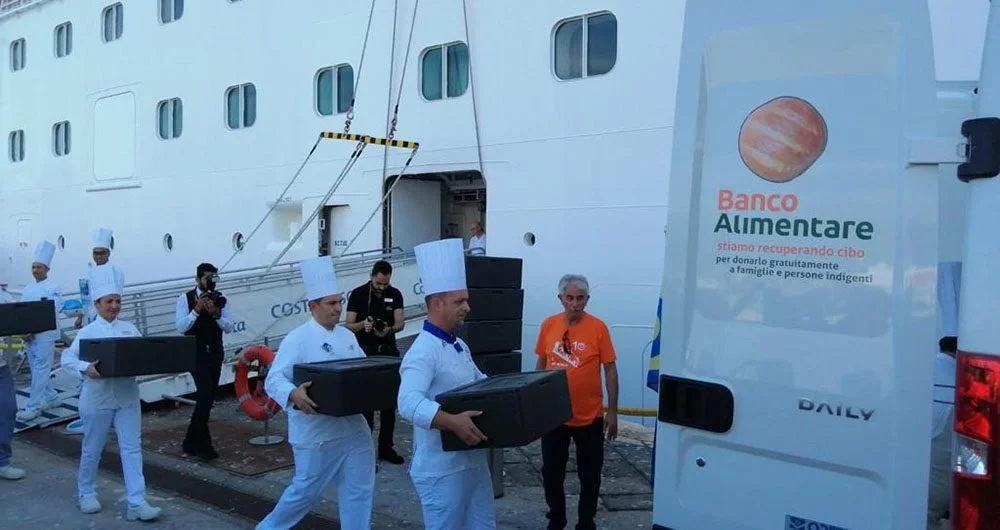
One of the questions I hear from clients is, "What happens to all the food that's prepared on a cruise ship?"
With thousands of guests dining every day, it's a fair question.
The answer might surprise you.
Carnival Corporation has spent nearly a decade rethinking how it handles surplus food, and the result is a program that's making a meaningful difference in communities around the world. Instead of allowing safe, unserved meals to go to waste, the company is working with local governments, food banks, and nonprofit organizations to provide those meals to families experiencing food insecurity.
It Started with a Simple Question
Nearly ten years ago, Costa Cruises—one of Carnival Corporation's cruise brands—set out to reduce food waste onboard its ships.
The culinary teams improved forecasting, purchasing, storage, preparation, and serving practices, dramatically reducing excess food. Even with those improvements, there were still nutritious, freshly prepared meals that remained unserved after dining service.
Rather than throw those meals away, the company asked an important question:
Could these meals safely feed people who needed them?
The answer wasn't as simple as loading the food onto a truck.
Changing the Rules to Feed More People
Existing food safety regulations in many countries weren't designed for cruise ships to donate prepared meals ashore. Instead of abandoning the idea, Costa Cruises partnered with local authorities and food banks in Italy to develop a safe, scalable framework for surplus meal donations.
In 2017, the first program launched in Savona, Italy, making Costa Cruises the first cruise line to establish a regulatory framework for donating prepared, unserved meals from ships to local communities.
That success became the blueprint for future expansion.
Growing Port by Port
What began in one Italian port has grown into a global initiative.
Today, Carnival Corporation's surplus meal donation program spans ports throughout Europe, the Caribbean, and Latin America. By the end of 2025, the company had donated more than 320,000 meal portions to community partners serving families, schools, hospitals, and charitable organizations. In 2026, the program continued expanding with new donation partnerships in destinations including Roatán, Honduras, and Puerto Plata in the Dominican Republic.
Each expansion requires collaboration among local governments, port authorities, food banks, and shipboard culinary teams to ensure every donation meets strict food safety standards.
A Bigger Commitment to Sustainability
This initiative is part of Carnival Corporation's broader Less Left Over strategy, which focuses on reducing food waste without compromising the guest dining experience.
The results have been significant.
Since 2019, the company reports reducing food waste per guest by 47%, preventing millions of pounds of surplus food while saving resources that can be redirected toward other sustainability efforts.
For travelers, that means enjoying the same variety and quality of dining while supporting a company actively working to reduce waste and strengthen the communities its ships visit.
Why This Matters to Travelers
As a travel advisor, I believe vacations can do more than create incredible memories—they can also support destinations in meaningful ways.
Cruise tourism often brings economic benefits to ports through local excursions, restaurants, transportation providers, and small businesses. Programs like Carnival's surplus meal donations extend that impact by helping address food insecurity in the very communities that welcome cruise guests.
No single initiative solves hunger, but partnerships like these demonstrate how innovation and collaboration can create lasting change.
The Bottom Line
When people think about cruising, they usually picture beautiful destinations, exceptional dining, and unforgettable experiences.
It's encouraging to know that behind the scenes, some cruise lines are also finding thoughtful ways to reduce waste and give back to the communities they visit.
Carnival Corporation's surplus meal donation program reminds us that sustainability isn't only about protecting the environment—it's also about supporting people.
And that's a journey worth celebrating.